What is Intestinal Bipartition?
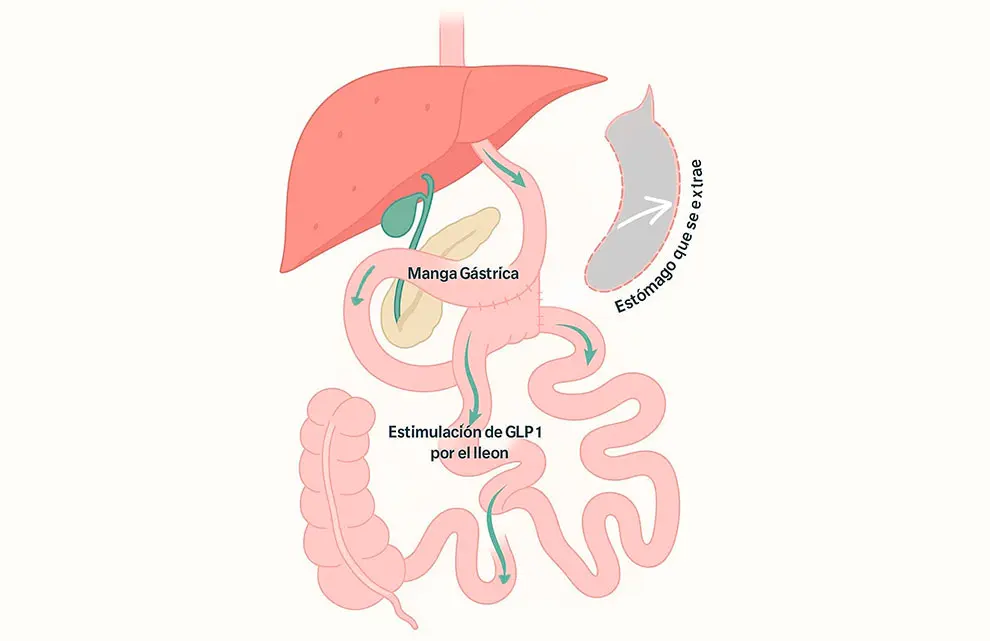
Intestinal transit bipartition (ITB) is an innovative metabolic surgical procedure that combines vertical sleeve gastrectomy with a partial small bowel bypass. Unlike traditional gastric bypass, this technique does not exclude any intestinal segment; instead, it creates a parallel circuit that allows early contact of food with the distal ileum, stimulating the release of intestinal hormones such as GLP-1 and peptide YY, which significantly improve glycemic control on a sustained basis. ITB is especially indicated for patients with poorly controlled type 2 diabetes and BMI between 30 and 35 kg/m², where hormonal mechanisms outweigh the importance of pure caloric restriction. The bariatric and metabolic surgery specialist in Merida offers ITB as a cutting-edge solution for metabolic disease management in Yucatan.
Dr. Mario Ruvalcaba performs intestinal transit bipartition in Merida using laparoscopic minimally invasive technique with 4 to 5 working ports. The procedure combines vertical sleeve gastrectomy with construction of an ileojejenal anastomosis creating the parallel intestinal circuit. Surgery lasts 2 to 3 hours under general anesthesia, requiring 2 to 3 nights of hospital stay. The laparoscopic approach minimizes postoperative pain, wound infection risk, and accelerates recovery compared to open surgery.
Certified by the Mexican Council of General Surgery and an active IFSO member with more than 5 years of experience in complex bariatric and metabolic procedures in Merida, Yucatan, Dr. Ruvalcaba provides comprehensive multidisciplinary evaluation and follow-up for every ITB patient. His team — nutritionist, psychologist, and internist — accompanies patients from preoperative assessment through long-term monitoring, which is critical for sustained success.
Clinical studies report type 2 diabetes remission rates exceeding 85% at one year, with 60% to 75% excess weight loss. Additionally, significant improvement in hypertension, dyslipidemia, and metabolic syndrome is observed in most patients. Most patients return to sedentary work activities between days 10 and 14, and to full physical activity within 4 to 6 weeks. If you have type 2 diabetes and obesity, ITB may offer the definitive solution that medications have not achieved. Schedule your consultation today.
Benefits
Type 2 Diabetes Control
Remission rates exceeding 85% at one year, even in patients with BMI below 35, through powerful intestinal hormonal modulation.
Effective Weight Loss
Loss of 60% to 75% of excess weight in the first 12 to 18 months, combining gastric restriction and hormonal changes.
No Severe Malabsorption
Unlike bypass, no intestinal segment is excluded, reducing the risk of serious nutritional deficiencies.
Minimally Invasive
Laparoscopic technique with faster recovery, less postoperative pain, and virtually imperceptible scars.
Who Is a Candidate?
- ✓Patients with BMI ≥ 35 with type 2 diabetes, metabolic syndrome, or obesity-associated diseases.
- ✓Individuals with BMI 30–34.9 with poorly controlled type 2 diabetes despite optimal medical treatment (metabolic indication).
- ✓Patients who previously underwent gastric sleeve and have weight regain or persistent diabetes who may benefit from conversion to ITB.
- ✓Adults with favorable multidisciplinary evaluation (nutritional, psychological, and medical) and commitment to lifestyle changes.
- ✓Patients without contraindications for general anesthesia or prior major abdominal surgery that compromises procedural viability.
Recovery Process
First week
Strict clear liquid diet. Hospital stay of 2 to 3 nights. Early mobilization from the first postoperative day to prevent thromboembolic complications. Pain management with intravenous and oral analgesics.
2–4 weeks
Transition to full liquids and then protein purees. Start of vitamin and protein supplementation. Return to sedentary daily activities around days 10 to 14. In-person or virtual nutritional follow-up.
1–3 months
Progressive introduction of soft and solid foods. Start of moderate physical activity. Adjustment of diabetes medications, generally with supervised reduction or discontinuation of hypoglycemic agents. Expected loss of 30% to 45% of excess weight.
6–12 months
Varied diet with emphasis on proteins and vegetables. Regular physical activity without restrictions. Loss of 60% to 75% of excess weight. Stable glycemic control. Quarterly follow-up with lab work to monitor nutritional and metabolic levels.
Frequently Asked Questions about Intestinal Bipartition
How does intestinal transit bipartition differ from gastric bypass?
The main difference is that in intestinal transit bipartition, no segment of the small bowel is excluded: food can pass through both the normal circuit and the new ileojejenal circuit. This leverages the potent hormonal effects of the distal ileum without generating the malabsorption that can occur with gastric bypass. In addition, bipartition preserves the pylorus, which reduces dumping syndrome.
Can I stop taking diabetes medications after surgery?
In most cases, yes. Type 2 diabetes remission rates with intestinal transit bipartition exceed 85% at one year. However, reduction or discontinuation of medications must always be done gradually and under strict medical supervision, with regular blood glucose monitoring.
How long does full recovery take?
Most patients return to sedentary work activities between days 10 and 14. Full functional recovery, including unrestricted physical activity, is generally achieved between 4 and 6 weeks. Intestinal adaptation to the new transit may take 2 to 3 months, during which the diet is gradually adjusted according to each patient's tolerance.
What supplements do I need to take for life?
Since intestinal transit bipartition partially modifies nutrient absorption, lifelong supplementation is recommended with a multivitamin with iron, calcium with vitamin D, vitamin B12, and protein. Specific doses are determined based on lab results at each follow-up visit. Periodic nutritional monitoring ensures levels remain within optimal ranges.
How much does intestinal transit bipartition cost in Merida?
The cost varies based on the hospital and individual preoperative requirements. Dr. Ruvalcaba offers an initial evaluation to confirm the indication and provide a detailed quote. Some medical insurance plans cover metabolic procedures when there is documented medical indication such as refractory type 2 diabetes. Contact the office for information on costs and insurance coverage.
How long does intestinal transit bipartition surgery take?
Intestinal transit bipartition takes 2 to 3 hours under general anesthesia in a hospital operating room. The laparoscopic procedure combines sleeve gastrectomy with construction of the ileojejenal anastomosis. Hospital stay is 2 to 3 nights for postoperative monitoring.
When can I return to work after intestinal transit bipartition?
Patients with sedentary or office work typically return between days 10 and 14 postoperatively. For moderately physical activities, waiting 4 to 6 weeks is recommended. Dr. Ruvalcaba provides a personalized medical leave certificate based on the type of work and each patient's recovery progress.
This content is for informational purposes only and does not replace a medical consultation.