What is Gastric Bypass?
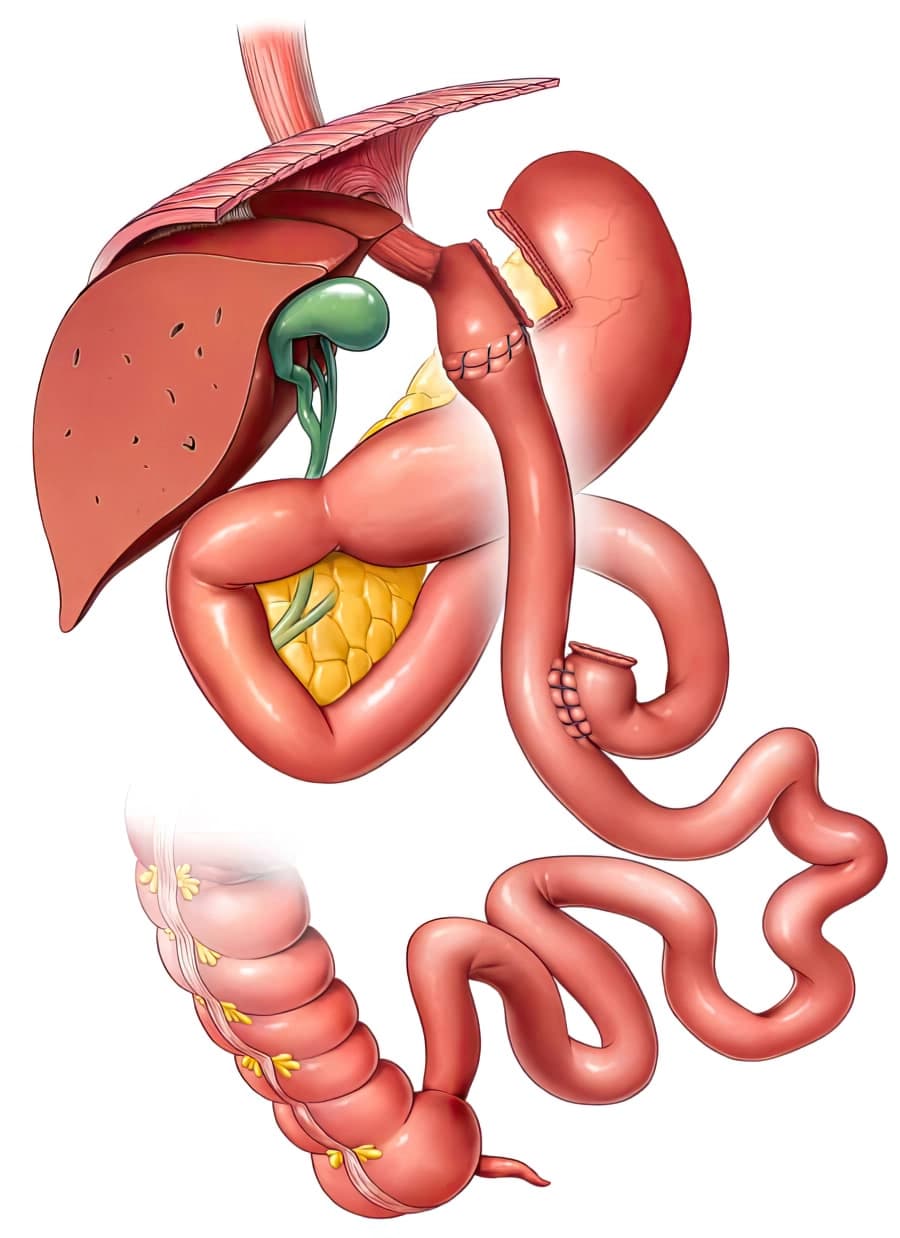
Roux-en-Y gastric bypass is a restrictive and malabsorptive procedure that involves creating a smaller stomach pouch from the upper portion of the stomach, which is then connected directly to a segment of the small intestine (alimentary limb), bypassing most of the stomach, the duodenum, and the first portion of the jejunum. This configuration limits the amount of food the patient can eat, reduces caloric absorption, and crucially triggers profound hormonal changes — including increased GLP-1, PYY, and reduced ghrelin — that improve insulin sensitivity and contribute to type 2 diabetes resolution in up to 80% of cases.
Dr. Mario Ruvalcaba performs gastric bypass laparoscopically with refined technique developed under world-class mentors. Patients can expect to lose between 70% and 80% of their excess weight in the first 18 to 24 months. This procedure is particularly effective for patients with a BMI above 45, poorly controlled type 2 diabetes, metabolic syndrome, and severe gastroesophageal reflux disease. Postoperative follow-up includes lifelong vitamin supplementation (iron, calcium, vitamin B12, fat-soluble vitamins), periodic nutritional monitoring, and laboratory testing to prevent nutritional deficiencies.
* To maintain metabolic control and sustained weight loss over time, multidisciplinary follow-up is the most important factor.
Benefits
Greater weight loss
Average loss of 70% to 80% of excess weight in 18 to 24 months, making it one of the bariatric procedures with the best long-term results.
Type 2 diabetes resolution
Up to 80% of patients achieve complete remission of type 2 diabetes thanks to the powerful hormonal and metabolic changes produced by gastric bypass.
Anti-reflux effect
Elimination of gastroesophageal reflux by diverting bile and acid flow away from the esophagus, making it the ideal option for obese patients with severe GERD.
Favorable hormonal changes
Significant increase in satiety hormones (GLP-1, PYY) and reduction of ghrelin, which decreases appetite and improves glucose metabolism on a sustained basis.
Who Is a Candidate?
- ✓Patients with a Body Mass Index (BMI) of 40 or higher, or a BMI of 35 or higher with severe metabolic comorbidities such as uncontrolled type 2 diabetes.
- ✓Individuals with poorly controlled type 2 diabetes who could benefit from the metabolic effects of bypass, even with a BMI between 30 and 35 (metabolic surgery).
- ✓Patients with severe gastroesophageal reflux disease (GERD) associated with obesity, as gastric bypass is the bariatric procedure that best controls reflux.
- ✓Individuals with a prior gastric sleeve who require a revision procedure due to weight regain or intractable reflux.
- ✓Motivated adults who understand the need for lifelong vitamin supplementation and strict nutritional follow-up as an integral part of treatment.
Recovery Process
First week
Strict clear liquid diet with fractionated hydration (small, frequent sips). Rest at home with early ambulation to prevent thromboembolism. Pain management with oral analgesics. Wound check and oral tolerance assessment at 7 days.
2-4 weeks
Progression to full liquids and protein-rich purees. Start of mandatory vitamin supplementation (multivitamin, iron, calcium with vitamin D, vitamin B12). Gradual return to low-demand work activities.
1-3 months
Progressive introduction of soft solid foods, prioritizing lean proteins. Start of supervised moderate physical activity. It is essential to learn to identify and avoid dumping syndrome, which occurs when consuming simple sugars or large meals.
6-12 months
Balanced and varied diet without major restrictions, maintaining protein priority and avoiding concentrated sugars. Regular physical activity. Quarterly lab tests to detect iron, B12, calcium, and fat-soluble vitamin deficiencies. Expected loss of 70% to 80% of excess weight.
Frequently Asked Questions about Gastric Bypass
What is the difference between gastric bypass and gastric sleeve?
Gastric sleeve is a purely restrictive procedure that reduces the size of the stomach, while gastric bypass combines restriction with intestinal bypass, producing more pronounced hormonal and metabolic changes. Gastric bypass offers greater weight loss (70-80% vs. 60-70% of excess weight), a higher diabetes resolution rate (up to 80%), and is superior for controlling gastroesophageal reflux. However, it requires lifelong vitamin supplementation and stricter nutritional follow-up. Dr. Ruvalcaba evaluates each case individually to recommend the most appropriate procedure.
What is dumping syndrome?
Dumping syndrome is a side effect that can occur after gastric bypass when consuming foods high in simple sugars or fats. It presents as dizziness, nausea, sweating, rapid heartbeat, abdominal cramps, and diarrhea, usually within 10 to 30 minutes after eating. Although uncomfortable, dumping acts as a negative feedback mechanism that helps patients avoid unhealthy foods. It is prevented by following nutritional recommendations and avoiding sweets, sodas, and processed foods.
Will I need to take vitamins for life after gastric bypass?
Yes, lifelong vitamin and mineral supplementation is mandatory after gastric bypass. By bypassing a portion of the small intestine, the surface area for absorbing essential nutrients is reduced. Basic supplements include: daily multivitamin with minerals, calcium citrate with vitamin D (1,200-1,500 mg/day), vitamin B12 (sublingual or monthly injection), elemental iron (45-60 mg/day, especially for premenopausal women), and in some cases, fat-soluble vitamins (A, D, E, K). Periodic lab tests allow dose adjustments based on individual needs.
Is gastric bypass reversible?
Technically, gastric bypass can be surgically reversed since the excluded stomach is preserved within the abdomen. However, reversal is a complex procedure with significant risks and is rarely performed. In practice, gastric bypass is considered a permanent procedure. What is possible and more common is bypass revision — adjusting the size of the gastric pouch or the length of the intestinal limb — in patients who experience weight regain or long-term complications. Dr. Ruvalcaba also performs bariatric revision surgeries.
This content is for informational purposes only and does not replace a medical consultation.