What is Achalasia Surgery?
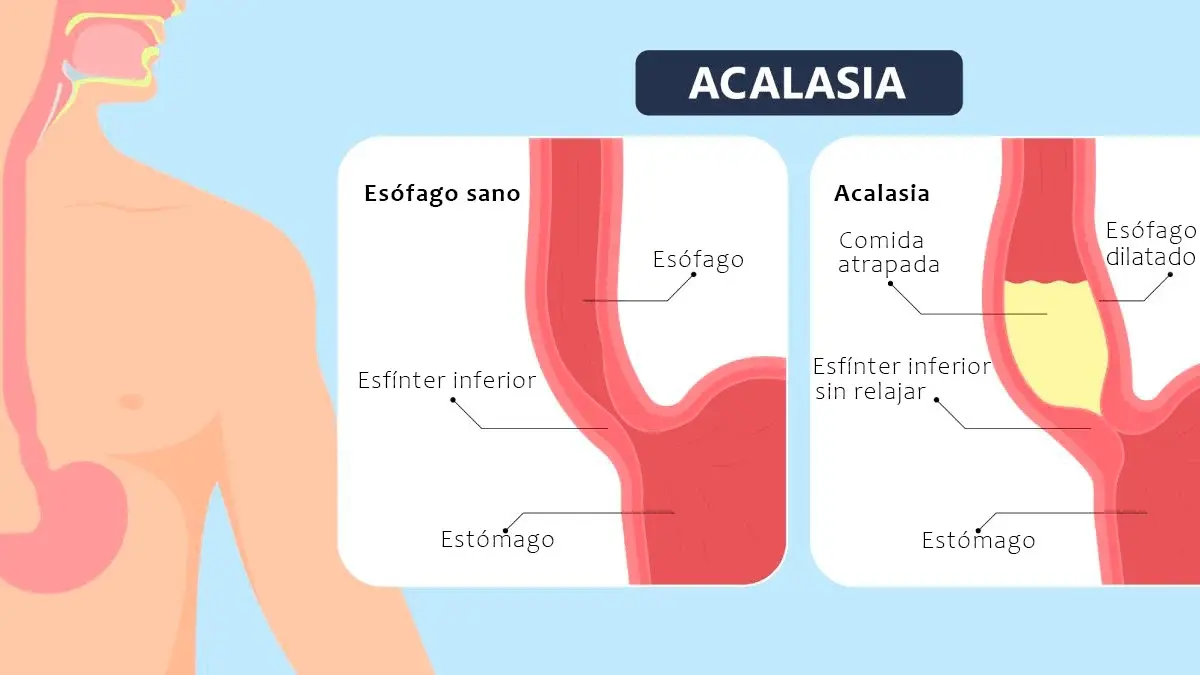
Achalasia is an esophageal motor disorder of unknown cause (possibly autoimmune) characterized by the inability of the lower esophageal sphincter to relax during swallowing and by the absence of normal esophageal peristalsis. This prevents adequate passage of food into the stomach, causing progressive dysphagia for solids and liquids, regurgitation of undigested food, chest pain, and weight loss. Its incidence is 1 to 2 cases per 100,000 inhabitants per year, most frequently between ages 25 and 60. Without treatment, achalasia progresses and may produce megaesophagus with severe nutritional deterioration. In Merida, the achalasia surgery specialist in Yucatan offers the definitive reference laparoscopic treatment.
Dr. Mario Ruvalcaba performs laparoscopic Heller myotomy in Merida, the reference surgical procedure for achalasia. Under general anesthesia and through 4 to 5 small incisions, a precise longitudinal incision is made in the muscle fibers of the lower esophageal sphincter without perforating the underlying mucosa, eliminating the obstacle to food passage. The procedure is complemented with a Dor partial fundoplication (anterior, 180°) to prevent gastroesophageal reflux that might arise upon releasing the sphincter. Surgery lasts 1.5 to 2.5 hours with hospital discharge at 24-48 hours.
With certification from the Mexican Council of General Surgery and more than 5 years of experience in laparoscopic esophageal surgery in Merida, Dr. Ruvalcaba performs complete preoperative functional evaluation with high-resolution manometry and upper digestive endoscopy to correctly classify achalasia and select the most appropriate technique. He operates at first-level hospitals in Merida, Yucatan, with the diagnostic and therapeutic resources needed for complex esophageal pathology management.
Long-term studies report dysphagia resolution in more than 90% of patients after laparoscopic Heller myotomy, with success rates exceeding 85% at 10 years. Improvement is generally notable from the first postoperative hours. Most patients return to their activities within 7 to 10 days. If you have difficulty swallowing that does not respond to other treatments, laparoscopic surgery may offer the definitive solution. Schedule your consultation today.
Benefits
Dysphagia Resolution
More than 90% of patients achieve normal swallowing after myotomy, with sustained long-term results in the vast majority.
Definitive Treatment
Unlike pneumatic dilations or botulinum toxin, myotomy offers more durable results without the need to repeat the procedure.
Anti-Reflux Protection
The Dor fundoplication included in the procedure prevents gastroesophageal reflux that might arise after releasing the sphincter.
Minimally Invasive
Laparoscopic approach allowing fast recovery, with hospital discharge in 24 to 48 hours and return to work in 1 to 2 weeks.
Who Is a Candidate?
- ✓Patients with confirmed achalasia diagnosis by high-resolution esophageal manometry (elevated lower esophageal sphincter pressure with esophageal aperistalsis).
- ✓Individuals with progressive dysphagia for solids and liquids with associated weight loss.
- ✓Patients who did not respond satisfactorily or have recurrence after prior endoscopic treatments (pneumatic dilation or botulinum toxin).
- ✓Young or middle-aged adults in whom a more durable treatment is preferred to avoid repeated procedures.
- ✓Patients with type I or II achalasia (Chicago classification) without severe megaesophagus that still allows laparoscopic surgery as first option.
Recovery Process
First week
Full liquid diet for the first 5 to 7 days to allow myotomy healing. Hospital discharge at 24 to 48 hours. Improvement in dysphagia is notable from the first hours or days postoperatively.
2–4 weeks
Progression to soft diet and then solid foods according to tolerance. Most patients notice significant improvement in swallowing during this period. Return to sedentary work activities around days 7 to 10.
1–3 months
Complete adaptation with normal swallowing in the vast majority of patients. It is recommended to eat slowly and chew well as a habitual practice. Follow-up with manometry and/or upper GI series as indicated by the treating physician.
6–12 months
Full recovery. Long-term results evaluation. In case of residual symptoms or recurrence, additional management options are assessed. Patients with prior megaesophagus may require closer follow-up.
Frequently Asked Questions about Achalasia Surgery
How is achalasia diagnosed?
The diagnosis of achalasia is confirmed by high-resolution esophageal manometry, which measures pressure and motility patterns of the esophagus and lower sphincter. Complementarily, upper digestive endoscopy is performed to rule out other causes of dysphagia, and upper GI series with contrast to evaluate the degree of esophageal dilation and emptying pattern.
What is the difference between Heller myotomy and pneumatic dilations?
Pneumatic dilations are a less invasive endoscopic treatment but with higher recurrence rates (40–50% at 5 years) and perforation risk. Laparoscopic Heller myotomy offers greater durability (more than 80% success at 10 years) with fast recovery. In young patients and those who do not respond to dilations, myotomy is the preferred option.
Can achalasia recur after surgery?
Heller myotomy offers excellent long-term results, with success rates exceeding 85% at 10 years. However, in a smaller percentage of patients, residual symptoms or late recurrence due to fibrosis at the myotomy site may occur. In these cases, options such as pneumatic dilation, botulinum toxin, or in selected cases a new intervention are assessed.
Is there any alternative to surgery to treat achalasia?
Yes. The main alternatives are: botulinum toxin injection (temporary effect of 6 to 12 months), endoscopic pneumatic dilation (good short-term efficacy but higher recurrence), and POEM (per-oral endoscopic myotomy), an advanced endoscopic technique that achieves results similar to laparoscopic surgery but without external incisions.
How much does achalasia surgery (Heller myotomy) cost in Merida?
The cost varies based on the hospital and required specialized preoperative studies (esophageal manometry, endoscopy, radiological series). Dr. Ruvalcaba provides a detailed quote during the initial consultation. Some medical insurance plans cover the procedure when there is confirmed achalasia diagnosis. Contact the office for information on costs and coverage.
How long does laparoscopic Heller myotomy take?
Laparoscopic Heller myotomy with Dor fundoplication takes 1.5 to 2.5 hours under general anesthesia. The procedure requires special technical precision to make the muscle incision without perforating the esophageal mucosa. Hospital discharge is given at 24-48 hours with a liquid diet for the first 5 to 7 days.
When can I return to work after achalasia surgery?
Patients with sedentary work typically return between days 7 and 10 postoperatively. Improvement in dysphagia is generally notable from the first days. For physical work, 2 to 3 weeks of rest is recommended. Complete adaptation to the new anatomy and normalization of swallowing are achieved between 4 and 8 weeks.
This content is for informational purposes only and does not replace a medical consultation.