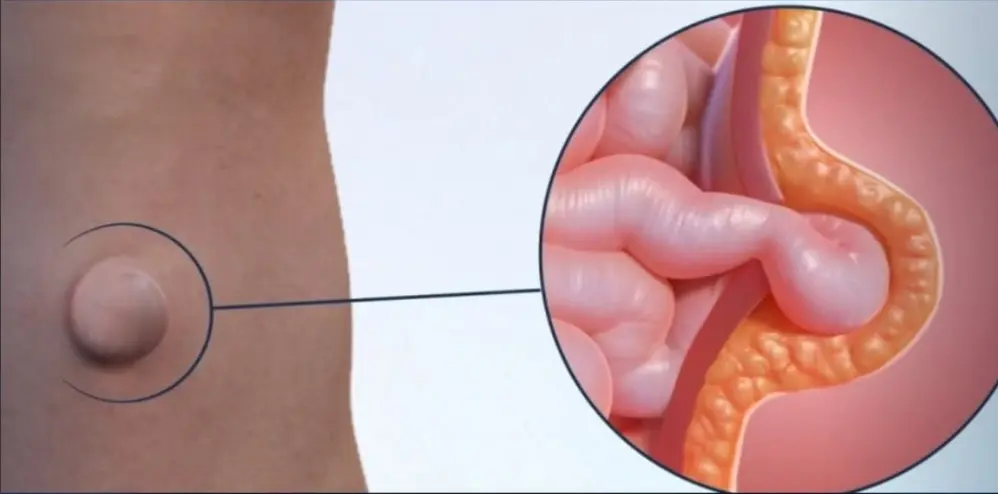
What is Ventral Hernias?
Ventral hernia surgery in Merida addresses defects of the anterior abdominal wall, including umbilical hernia (at the navel), epigastric hernia (between navel and sternum), and incisional hernia (at a prior surgical scar). Ventral hernias affect 10-15% of the population and are more frequent in people with obesity, prior abdominal surgeries, or intense physical exertion. If left untreated, hernias grow progressively and can complicate with bowel incarceration or strangulation, situations requiring emergency surgery with higher risk. Laparoscopic ventral hernia surgery in Yucatan offers clear advantages over open surgery: less pain, faster recovery, and significantly lower recurrence rates.
Dr. Mario Ruvalcaba performs ventral hernia surgery in Merida using laparoscopic IPOM (Intraperitoneal Onlay Mesh) technique through 3 to 4 small incisions away from the hernia defect. Under general anesthesia, the herniated content is reduced, the defect is identified, and a state-of-the-art prosthetic mesh is placed on the inner surface of the abdominal wall to reinforce it. Surgery lasts 1 to 3 hours depending on the size and number of hernias. Hospital discharge is given the following day with functional recovery in 1 to 2 weeks. Laparoscopic technique achieves recurrence rates below 2%, compared to 10-15% with open repair without mesh.
Board-certified general surgeon in Merida, Yucatan, Dr. Ruvalcaba holds certification from the Mexican Council of General Surgery and more than 5 years of experience in laparoscopic abdominal wall surgery. He operates at the leading hospitals in Merida with state-of-the-art triple-layer anti-adhesion barrier prosthetic meshes, selected based on each hernia's characteristics. His protocol includes simultaneous repair of multiple defects when possible in a single surgical session.
The results are excellent: recurrence rates below 2%, minimal postoperative pain managed with oral analgesics, and return to daily activities in 7 to 14 days. Complex incisional hernias and recurrent hernias are especially favored by the laparoscopic approach, which accesses previously undissected planes. Do not wait for your hernia to become complicated. Schedule your consultation today.
Benefits
Minimal Recurrence
Prosthetic mesh reduces the recurrence rate to less than 2%, compared to 10–15% with open repair without reinforcement.
Less Pain
The laparoscopic approach avoids extensive muscle dissection, resulting in significantly less postoperative pain.
Early Discharge
Most patients return home the following day with complete functional recovery in 1 to 2 weeks.
Ideal for Complex Hernias
Especially advantageous for large incisional hernias, recurrent hernias, or patients with multiple simultaneous hernias.
Who Is a Candidate?
- ✓Patients with symptomatic umbilical hernia (pain, discomfort with exertion, visible protrusion) of any size.
- ✓Individuals with incisional hernia (at a prior surgical scar) causing symptoms or presenting incarceration risk.
- ✓Patients with symptomatic epigastric hernia or with complication risk due to fatty or intestinal content.
- ✓Individuals with recurrent ventral hernias after prior surgery requiring mesh reinforcement to reduce risk of new recurrence.
- ✓Adults with multiple abdominal wall hernia defects that can be addressed simultaneously by laparoscopy in a single intervention.
Recovery Process
First week
Hospital discharge the following day or at 48 hours. Moderate pain manageable with oral analgesics. It is normal to feel discomfort at the mesh level during the first weeks. Gentle walks from the first day. Avoid lifting objects over 3 kg.
2–4 weeks
Return to sedentary work activities between days 7 and 14. Unrestricted diet. Avoid abdominal strain, weight lifting, and impact exercise. Discomfort at the mesh level gradually decreases.
1–3 months
Functional recovery. The mesh integrates into the abdominal wall tissues during this period. Gradual start of moderate cardiovascular exercise. For physically demanding work, it is recommended to wait 4 to 6 weeks.
3–6 months
Complete mesh integration. Unrestricted physical activity, including weight training and high-impact activities. The abdominal wall is permanently reinforced.
Frequently Asked Questions about Ventral Hernias
Is mesh always needed to repair a ventral hernia?
In small umbilical hernias (less than 1 cm), primary closure without mesh can be performed with good results. However, for hernias of 1 cm or more, mesh repair offers significantly lower recurrence rates (less than 2% vs more than 10% without mesh). In incisional hernias, mesh is practically always necessary.
Can mesh generate long-term complications?
Modern meshes used in laparoscopic ventral hernia surgery have excellent long-term safety profiles. Complications are infrequent and include mesh infection (less than 1%), seroma (fluid accumulation) in the first weeks that generally reabsorbs on its own, and rarely chronic pain.
What happens if I don't have the hernia operated?
Ventral hernias do not disappear on their own and tend to grow over time. The main complication is incarceration: the hernial content becomes trapped in the defect and cannot be manually reduced. If blood flow to the herniated intestine is compromised (strangulation), this is a surgical emergency that significantly increases the risk of surgery.
Can I exercise after hernia surgery?
Yes, but progressively. Short walks begin from the first day. Moderate cardiovascular exercise can begin between 2 and 4 weeks. Weight training, abdominal exercises, and high-impact activities should wait 6 to 8 weeks to allow complete mesh integration into the tissues.
How much does ventral hernia surgery cost in Merida?
The cost varies based on the size and number of hernias, the type of mesh used, and the hospital. Dr. Ruvalcaba offers an initial consultation to evaluate the case and provide a detailed quote. Most medical insurance plans cover symptomatic ventral hernia surgery. Contact the office for information on costs and to verify your coverage.
How long does ventral hernia surgery take?
Laparoscopic ventral hernia surgery takes 1 to 3 hours depending on the defect size, number of hernias, and complexity. Simple umbilical hernias are resolved in 1 hour; large or multiple incisional hernias may require up to 3 hours. All procedures are performed under general anesthesia with 1 to 2 nights of hospital stay.
When can I return to work after ventral hernia surgery?
For sedentary or office work, return is between days 7 and 14 postoperatively. For moderate physical work, 4 to 6 weeks. For intense physical work, 6 to 8 weeks are recommended until complete mesh integration. Dr. Ruvalcaba provides a leave certificate based on each patient's needs.
This content is for informational purposes only and does not replace a medical consultation.