What is Gastric Balloon?
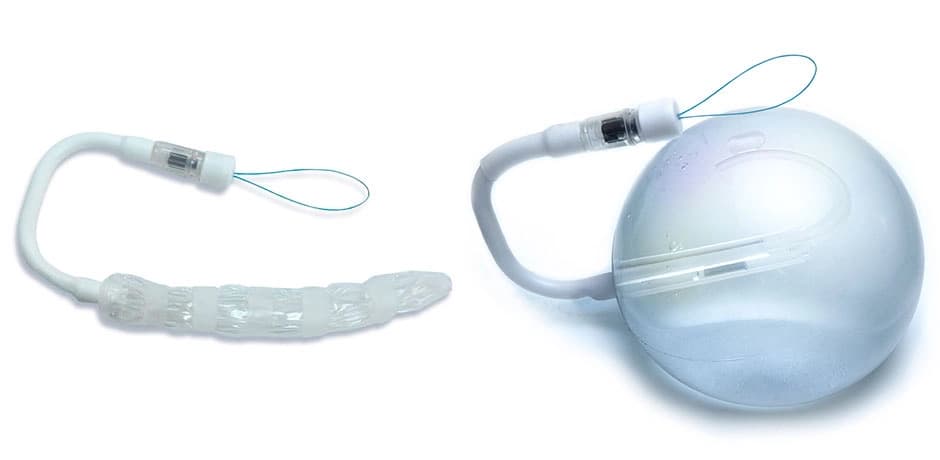
The intragastric balloon consists of a medical-grade silicone sphere that is inserted deflated through the mouth using a flexible endoscope and, once inside the stomach, is filled with sterile saline solution tinted with methylene blue (between 400 and 700 ml depending on the model). The balloon occupies approximately one-third of the gastric volume, inducing a feeling of fullness and satiety with smaller amounts of food. It requires no incisions and the entire procedure takes 20 to 30 minutes under light sedation (in most cases). The patient goes home the same day.
The balloon remains in the stomach for 6 to 12 months (depending on the type of device) and is removed endoscopically in a manner similar to placement. During this period, the patient works with a multidisciplinary team — nutritionist, psychologist, and bariatric physician — to retrain eating habits and establish a physical activity routine. Expected weight loss is 10% to 15% of total body weight (or 30% to 40% of excess weight). The intragastric balloon is ideal for patients with overweight or grade I obesity (BMI between 27 and 35) who do not qualify for or do not wish to undergo bariatric surgery, as well as for patients with severe obesity as a bridge therapy before a definitive surgical procedure.
Benefits
No surgery or incisions
An endoscopic procedure that requires no cuts, sutures, or staples. Placed and removed orally under light sedation, eliminating the risks associated with surgery.
Outpatient procedure
Takes only 20 to 30 minutes with same-day discharge. No hospitalization or extended rest needed — you can return to your activities in 2 to 3 days.
Habit retraining
The balloon acts as a therapeutic tool that teaches you to eat appropriate portions and recognize satiety signals, fostering lasting habit changes.
Fully reversible
The balloon is easily removed via endoscopy at the end of treatment (6 to 12 months), leaving no permanent changes to your digestive anatomy.
Who Is a Candidate?
- ✓Individuals with overweight or grade I obesity (BMI between 27 and 35) who have not achieved sufficient results with conventional diet and exercise.
- ✓Patients who wish to lose weight without undergoing bariatric surgery, whether due to personal preference, medical conditions, or because they do not meet surgical criteria.
- ✓Individuals with severe obesity (BMI above 40 or 50) who need to lose weight prior to bariatric or other surgery to reduce surgical risk (bridge therapy).
- ✓Motivated adults willing to actively participate in a multidisciplinary program of dietary habit change and physical activity throughout the treatment period.
- ✓Patients without endoscopic contraindications such as prior gastric surgery, large hiatal hernias, active ulcers, or uncontrolled coagulation disorders.
Recovery Process
First week
The first 3 to 5 days are the most intense in terms of adaptation: nausea, vomiting, and abdominal cramps are common as the stomach adjusts to the balloon. These are managed with antiemetic and antispasmodic medications. Clear liquid diet only. Constant hydration in small sips.
2-4 weeks
Discomfort decreases significantly as the body adapts. Transition to full liquids and then pureed foods. Formal start of the nutritional program with meal planning, food tracking, and education on appropriate portions.
1-3 months
Regular eating with controlled portions. The patient learns to identify signals of true satiety and hunger. Start or intensification of exercise routine. Weight loss is usually most accelerated during this phase, reaching 5% to 8% of total body weight.
6-12 months
Habit consolidation phase before balloon removal. The patient should have adopted a sustainable healthy lifestyle. Expected total loss of 10% to 15% of body weight. Upon endoscopic balloon removal, nutritional follow-up continues to prevent weight regain.
Frequently Asked Questions about Gastric Balloon
Is the intragastric balloon procedure painful?
Balloon placement is performed under intravenous sedation, so the patient does not experience pain or discomfort during the procedure. In the first 3 to 5 days afterward, it is normal to experience nausea, a feeling of stomach heaviness, cramps, and in some cases vomiting, as part of the stomach's adaptation to the balloon. These symptoms are effectively controlled with antiemetic, antispasmodic, and gastric protectant medications prescribed from the day of placement.
How much weight can I lose with an intragastric balloon?
Average weight loss with the intragastric balloon is 10% to 15% of total body weight, equivalent to 30% to 40% of excess weight. For example, a person weighing 220 lbs (100 kg) can expect to lose 22 to 33 lbs (10 to 15 kg). Results largely depend on the patient's commitment to the nutritional and physical activity program. Highly committed patients can achieve losses exceeding 15%. It is important to understand that the balloon is a tool that facilitates habit change, not a substitute for it.
What happens if the balloon deflates inside the stomach?
Modern intragastric balloons are filled with saline solution tinted with methylene blue, a safe dye that acts as an alert system. If the balloon punctures or deflates, the methylene blue is released into the stomach and absorbed, turning the urine blue or greenish. If the patient notices this change in urine color, they should immediately contact Dr. Ruvalcaba to schedule endoscopic removal of the deflated balloon and prevent it from migrating into the intestine. Although spontaneous deflation is rare (less than 1%), it is important to know this warning sign.
Is the intragastric balloon better than bariatric surgery?
It is neither better nor worse — they are different treatments for different patient profiles. The intragastric balloon is ideal for overweight and mild to moderate obesity (BMI 27-35), requires no surgery, is reversible, and offers more modest weight loss (10-15% of total weight). Bariatric surgery (gastric sleeve or bypass) is indicated for severe obesity (BMI above 35-40), offers more dramatic results (60-80% of excess weight), and is permanent. Dr. Ruvalcaba evaluates each case comprehensively to recommend the option that offers the best results based on the patient's needs and goals.
This content is for informational purposes only and does not replace a medical consultation.